Thriven Design celebrates opening of Project HOME’s Hawthorne House Respite
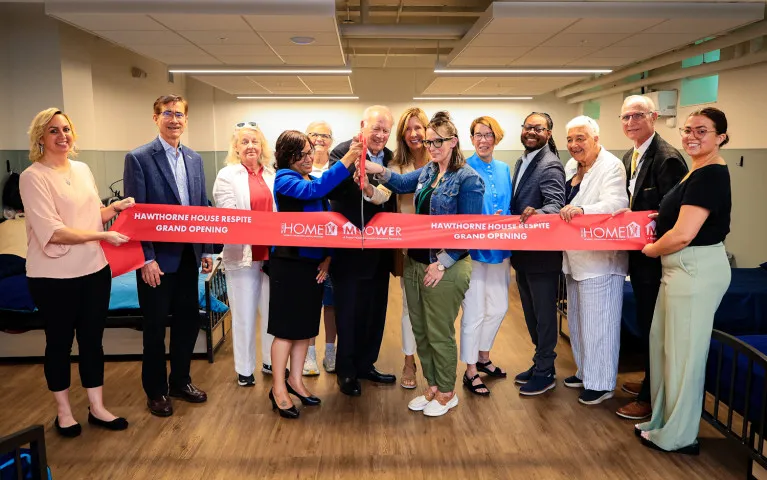
Thriven Design was honored to attend the ribbon cutting for Hawthorne House Respite on Wednesday, June 24, and celebrate this vital community support for homeless and at-riskPhiladelphians developed by Project HOME.
The 20-bed, dormitory-style center, for which Thriven Design provided architectural, MEP engineering, and interior design services, enables patients who are homeless or overcoming addiction to continue to recover once discharged from the hospital.
Hawthorne House is named for Rose Hawthorne, the Dominican Sister who founded Sacred Heart Home. The programoccupies the lower level of Project Home’s Sacred Heart Recovery Residence in the Hunting Park section of Philadelphia.


The adaptive reuse of the lower level space required close collaboration and consideration ofclient needs and creative problem solving to address:
• Adapting previously utilitarian spaces to provide comfortable, quality living areasfor residents and support staff. Special attention was paid to acoustics, light attenuation, visual calm, personal space and personal storage. creating private space for patient consultation and health conversations.
• Maintaining the existing fabric of the building interior where possible, designing details and finishes to integrate old and new materials in a complimentary way.
• Interfacing new systems for HVAC, plumbing, and power with the existing building infrastructure, and determining where investments should be made to replace older existing equipment
• Assessing which portions of the existing 70-year-old infrastructure could remain versus which pieces should be replaced, with a long-term lens on maintenance, efficiency, and reliability.


“We can’t stress enough how much housing is healthcare, and that respite beds at every level are so important as part of the ecosystem,” said Donna Bullock, Project HOME’s CEO, at the event. Powerful testimony was given by one resident, who shared her own journey through recovery. She said living with The Project HOME Collaborative has been a, “life saving event” and plans to express her gratitude through her own work as a now Certified Recovery Specialist. “I want to do what someone did for me.”
The $3.4 million Hawthorne House project received funding from The Estadt-Lubert Collaborative for Housing and Recovery, a partnership of Jefferson Health, Penn Medicine, and Temple Health, all of whom will refer patients to the respite, as well as Prevention Point, and philanthropists Ira Lubert and Pam Estadt.
Thriven Design has a decades-long relationship collaborating with Project HOME on affordable and supportive residences for those at-risk-of or overcoming homelessness, including at-risk veterans, individuals with substance use disorder, LGBTQ+ youth, and youth transitioning out of foster care. Past projects include Gloria Casarez Residence, James Widener Ray Homes, Peg’s Place, Maguire Residence, and Ruth Williams House.